

What Causes Skin Cancer and How Can It Be Prevented?
In the sun-drenched landscape of Stockbridge, GA, protecting your skin is more than a beauty routine—it is a vital health priority. At Bella Dermatology, we are dedicated to providing with the knowledge and clinical care necessary to combat the rising incidence of skin malignancies. Led by Dr. Terry Sharpe, MD, our practice focuses on a “prevention-first” philosophy, offering meticulous screenings and personalized education. By understanding the biological triggers of skin cancer and implementing a proactive defense, you can enjoy the Georgia sunshine while significantly reducing your long-term risks. For more information, contact us or request an appointment online. We are conveniently located at 1365 Rock Quarry Rd, Suite 300 Stockbridge, GA 30281.
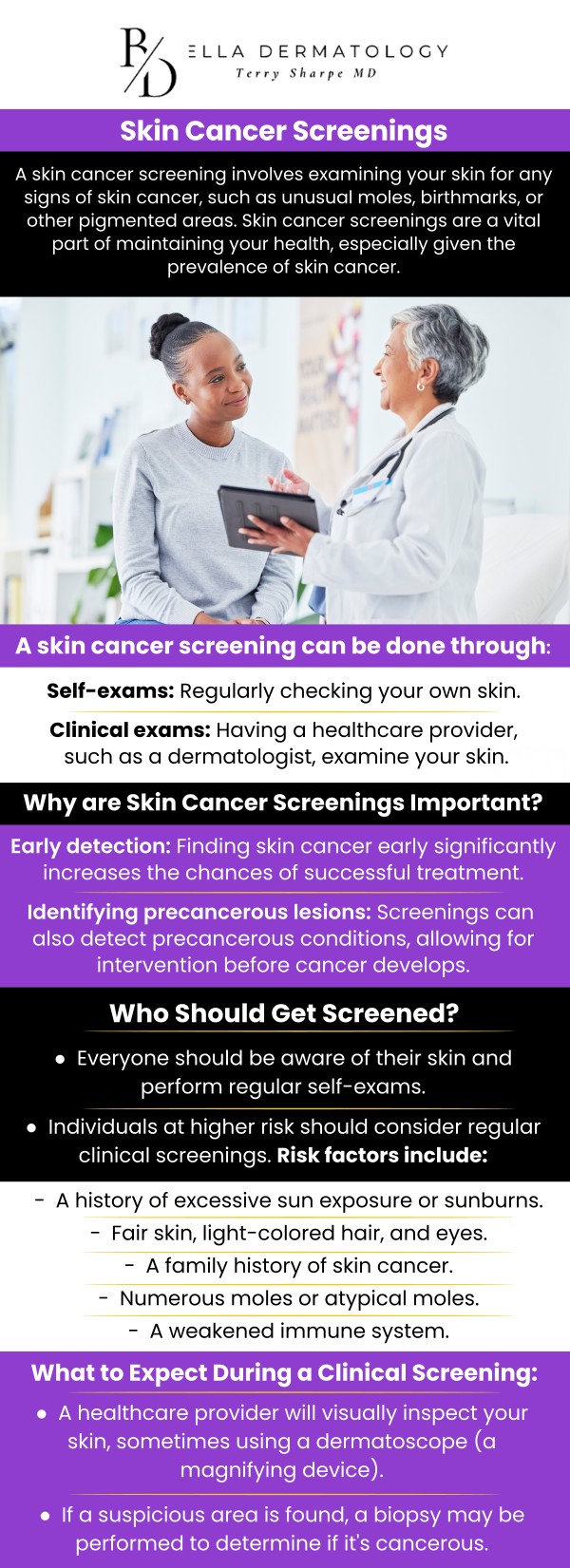
Table of Contents:
What are the different types of skin cancer and how do they differ?
How can you tell if a mole or skin lesion is cancerous?
What role does sun exposure play in the development of skin cancer?
How is skin cancer treated and what are the options for early-stage cancer?
Targeted Prevention and Professional Care with Dr. Terry Sharpe at Bella Dermatology
Skin cancer is not a singular disease; it is a group of conditions defined by which specific skin cells undergo a malignant transformation. The three primary types we treat at Bella Dermatology differ in their appearance, growth rate, and potential for spreading (metastasis).
• Basal Cell Carcinoma (BCC): This is the most prevalent form of skin cancer globally. It arises in the basal cells—the small, round cells found in the lower layer of the epidermis. BCC usually grows slowly and rarely spreads to distant organs, but it can be highly destructive to local tissue if left untreated. It often looks like a pearly or waxy bump.
• Squamous Cell Carcinoma (SCC): Originating in the flat, scale-like squamous cells that compose most of the skin’s surface, SCC is the second most common type. It is more aggressive than BCC and has a higher risk of spreading to lymph nodes or other organs. It often presents as a firm, red nodule or a persistent, scaly patch that may bleed.
• Melanoma: While it accounts for a smaller percentage of cases, melanoma is the most dangerous form. It begins in the melanocytes, the cells responsible for skin pigment. Because it can spread rapidly throughout the body, early detection is absolutely critical for a positive prognosis.
Self-examination is your first line of defense. At our Stockbridge clinic, we teach patients to monitor their skin for any “Ugly Duckling” spots—lesions that look, feel, or behave differently than others on the body. For identifying potential melanoma, we use the ABCDE clinical framework:
• A – Asymmetry: One half of the lesion does not mirror the other.
• B – Border: The edges are notched, ragged, or poorly defined rather than smooth.
• C – Color: The spot contains multiple shades of brown, black, tan, or even red and blue.
• D – Diameter: Most melanomas are larger than 6mm (roughly the size of a pencil eraser), though smaller ones are becoming more common.
• E – Evolving: This is the most important factor. Any mole that changes in size, shape, color, or begins to itch or bleed should be evaluated by a Dr. immediately.
Sunlight contains Ultraviolet (UV) radiation, which acts as a powerful mutagen. When UV rays penetrate the skin, they can physically break the DNA strands within your cells. If the body’s natural repair mechanisms cannot keep up with this damage, mutations occur that cause cells to multiply uncontrollably, leading to tumors.
• UVA Rays: These “Aging” rays penetrate deep into the dermis, causing long-term damage like wrinkles and increasing the risk of melanoma.
• UVB Rays: These “Burning” rays are the primary cause of sunburns and play a major role in the development of BCC and SCC.
In Georgia, the UV index is often high, meaning cumulative exposure adds up quickly. It is not just about the intense sunburns of youth; everyday exposure while driving or walking can contribute to your lifetime “UV load.”
The goal of treatment at Bella Dermatology is to remove the malignancy completely while preserving as much healthy skin as possible. When caught early, skin cancer has an exceptionally high cure rate.
• Mohs Micrographic Surgery: This specialized procedure involves removing the cancer layer by layer and examining each under a microscope in real-time. It offers the highest cure rate and is ideal for areas where tissue preservation is critical, such as the face.
• Excisional Surgery: The dermatologist removes the entire tumor along with a safety margin of healthy surrounding skin.
• Curettage and Electrodesiccation: Often used for superficial BCCs, this involves scraping away the cancer with a curette and using an electric current to destroy any remaining cells.
• Cryosurgery: Liquid nitrogen is used to freeze and destroy precancerous growths (actinic keratoses) or very thin, early-stage cancers.
• Topical Immunotherapy: For certain superficial cancers, we may prescribe creams that stimulate your own immune system to attack the malignant cells.
At Bella Dermatology, we believe that every skin cancer diagnosis is an opportunity for expert, compassionate intervention. Dr. Terry Sharpe combines her extensive clinical background with a meticulous eye for detail, ensuring that even the most subtle changes in your skin are identified during your annual screening. Dr. Sharpe understands that the word “cancer” is intimidating; she takes the time to walk you through your biopsy results and treatment options with clarity and empathy. For our patients in Stockbridge, her dedication means you have access to top-tier surgical and medical dermatology right in your backyard. Whether we are treating a small lesion or managing a complex diagnosis, your long-term health and aesthetic outcomes are our top priorities.
Skin cancer is a formidable challenge, but it is also one of the most preventable and treatable forms of cancer when handled with professional care. By staying vigilant with your self-exams and maintaining regular appointments at Bella Dermatology in Stockbridge, GA, you are taking the most important step toward protecting your future. If you haven’t had a professional skin check in the last year, or if you’ve noticed a spot that gives you pause, don’t wait. Contact us today or schedule your consultation and let our team provide the peace of mind you deserve. We are conveniently located at 1365 Rock Quarry Rd, Suite 300 Stockbridge, GA 30281. We serve patients from Stockbridge GA, McDonough GA, Jonesboro GA, Morrow GA, Ellenwood GA, Hampton GA, and surrounding cities.
Check Out Our 5 Star Reviews


Additional Services You May Need
• Acne Treatment
• Eczema Treatment
• Skin Cancer
• Skin Rejuvenation
• Skin Rashes Treatment
• Psoriasis Treatment
• Moles Treatment
• Wrinkles Treatment
• Wart Treatment
• Microneedling
• Rosacea Treatment
• Laser Hair Removal
• Skin Tightening
• Chemical Peels
• Melanoma Treatment
• Pediatric Dermatology
• Dermatological Surgery
• Adult Dermatology
• Annual Skin Exam
• Customized Skincare Regimens
• General Dermatology
• Sofwave Skin Tightening
• Dermaplaning
• Aerolase Laser
• Pediatric Eczema

Additional Services You May Need
• Acne Treatment
• Eczema Treatment
• Skin Cancer
• Skin Rejuvenation
• Skin Rashes Treatment
• Psoriasis Treatment
• Moles Treatment
• Wrinkles Treatment
• Wart Treatment
• Microneedling
• Rosacea Treatment
• Laser Hair Removal
• Skin Tightening
• Chemical Peels
• Melanoma Treatment
• Pediatric Dermatology
• Dermatological Surgery
• Adult Dermatology
• Annual Skin Exam
• Customized Skincare Regimens
• General Dermatology
• Sofwave Skin Tightening
• Dermaplaning
• Aerolase Laser
• Pediatric Eczema


 Send Text
 How May I Help You?